How to Interpret the New Food Pyramid
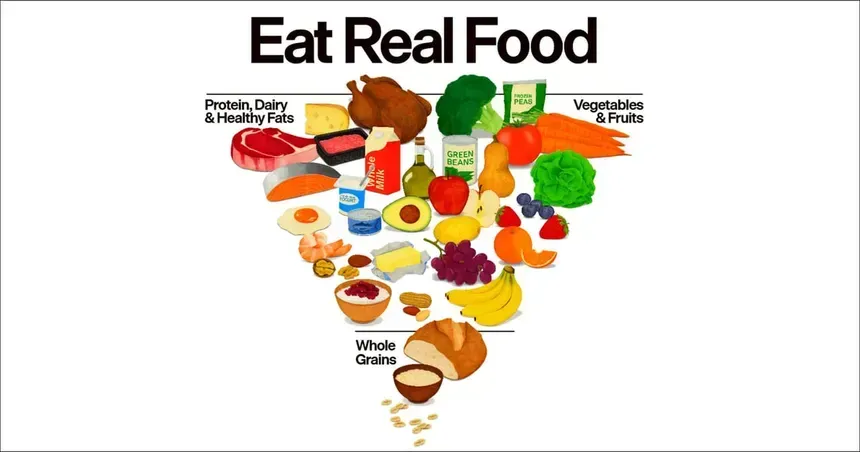
January 7th, 2026, the government released its updated dietary guidelines. Before the guidelines were released, I had no idea food could be so political. I have seen numerous articles from both sides of the aisle making strong convictions about the pyramid. Seeing all the attention and attraction to the new food pyramid, I thought I'd lay out what is the same and different from the previous pyramid and moving forward what it means for our country's and your personal health.
Old Pyramid vs New
The first change that took place was the HHS deciding to go back to a pyramid versus a plate visual. From 1992-2005 we had the original iteration of the food pyramid that most people would associate "the food pyramid" with. Grains/carbohydrates were the foundation and the biggest category. Fruits and vegetables on top of that. Then there was meat and dairy. Lastly, candy and sugar were at the pinnacle of the pyramid. After 13 years of that food pyramid, in 2005 they split the pyramid vertically. Nothing really changed much. This was to demonstrate that no category was above another. The difference between the categories was actually serving sizes.
In 2011, we had brand new visual and dietary guidelines. The government decided to ditch the pyramid and institute a plate view. This was to demonstrate visually what a healthy meal should look like on a plate. Vegetables occupied the biggest portion, grains came in as the second biggest portion. Fruit and meat split the last 40% of the plate, split evenly. Dairy occupied a serving as well to the side of the plate to symbolize a cup. This was the governments recommendation up until beginning of 2026.
Now, the pyramid is officially back. It has been flipped upside down from the original 1992 pyramid. Meats and dairy occupying the pinnacle. Below that vegetables and fruit take up the next tiers, then grains takes up the bottom. Other numerical recommendations were the doubling of protein intake per day. The recommendation is now 1.2 - 1.6 grams per kilogram of body weight. So, if you weigh 200lbs, you should be eating between 110g and 150g of protein per day. Saturated fats are still recommended to be 10% of caloric intake. That is the same as it was before. The biggest change in this iteration was the move to more protein and more prioritization of protein. Plus the overall encouragement of whole foods in general.
Take away
Now let's talk about what you should do or learn from the new pyramid. First, it is true, you should always strive first to eat whole foods. Never is there a time when processed or man made food is better than what nature has to offer. I don't think that is controversial. I also agree with the recommended protein addition. This doubled the daily recommendation from the previous pyramid. Not only do most people not get optimal protein for health., but protein is the most satiating nutrient. It will fill us faster than any other nutrient, leading to eating overall less quantity of food. Then in return less processed food.
Whether you agree or disagree with the pyramid or the politics behind it. Keep in mind, this alone won't make the country a healthier place. The first food pyramid didn't. MyPlate didn't. This one certainly won't. Now I do agree and align myself with most of this pyramid. But information alone won't get people to take action and change the trajectory of their health. This is no different. In 10 years the United States will still have the same or more heart disease, diabetes, cancer as we do now. So if you don't agree with the pyramid or the administration that implemented it, don't worry we aren't getting healthier from this one recommendation.
On another note, I don't think we should be looking to the government for health advice in the first place. It is true, they set certain recommendations or requirements for public school lunches and other programs. But you still have the sovereignty to eat what you want and make the choices you want. So don't freak out if you disagree or agree. For the country to take a leap forward towards fixing chronic illnesses, personal responsibility will need to be adopted universally. If you're looking to do so, look to the people that have and act out a healthy lifestyle and the people that have common sense when it comes to becoming healthier.
The Uncivilized Perspective